Insights · 12 articles
Features & Perspectives
Longer reads from DGA Fire Protection Engineering on fire science, notable fires, industry trends and the engineering profession.
The Insights topics answer one code question at a time. These articles cover the background: the fire science behind the rules, the fires that led to them, what is changing in the industry and how fire protection engineers train and work.
Sections
- 2 articles
Fire Science
How fires ignite, grow and spread, and the physics behind sprinklers, detectors and smoke control.
- How Hot Is a House Fire? Temperatures by Stage
- Flashover vs. Backdraft: How Two Different Fire Events Work
- 1 article
Industry Trends
What is changing in fire protection and building safety, and what it means for owners and design teams.
All Industry Trends articles - 1 article
Notable Fires
Fires that changed the codes: what happened, what the investigations found and the rules that came out of them.
All Notable Fires articles - 2 articles
The FPE Profession
Fire protection engineering as a career: degrees, NICET certification, the FPE PE exam and the day-to-day work.
- How to Become a Fire Protection Engineer: Degrees, Experience and PE Licensure
- Life Safety Consulting: What Engineers Do and Why
All features
Feature
Number One Cause of House Fires: What the Data Shows
Cooking is the number one cause of U.S. house fires, but smoking leads in deaths. See the latest USFA and NFPA data, why it happens and what cuts…
Feature
BLEVE Explained: How a Boiling Liquid Explosion Happens
A BLEVE is a pressure vessel failing while its liquid is above its boiling point. Learn the physics, the fireball, and how cooling water and relief valves help.
Feature
The Station Nightclub Fire: What Happened and What Changed
What NIST found about the 2003 Station nightclub fire in West Warwick, Rhode Island, why it grew so fast, and how the codes changed afterward.
Feature
NICET Certification: Levels, Subfields and How It Works
NICET certification explained by fire protection engineers: the four levels, the subfields, exams, work experience, recertification and how NICET differs from a PE license.
Feature
Thermal Runaway: How a Lithium-Ion Cell Fails and Why It Is Hard to Stop
Thermal runaway explained by fire protection engineers: what starts it, how heat and gas build inside a lithium-ion cell, why it spreads, and why water only cools.
Feature
One Meridian Plaza Fire: What Happened and What Changed
The 1991 One Meridian Plaza fire in Philadelphia, explained by fire protection engineers: the timeline, the standpipe failures, the sprinklers that stopped it, and what changed.
Fire Science · Feature
How Hot Is a House Fire? Temperatures by Stage
A house fire can pass 1,800°F (1,000°C) once a room is fully involved. See how temperatures change by stage, why rooms burn faster now, and what heat does.

The FPE Profession · Careers
How to Become a Fire Protection Engineer: Degrees, Experience and PE Licensure
A plain guide to becoming a fire protection engineer in the US: degree paths, the FE exam, required experience, the NCEES PE Fire Protection exam and state licensing.

Notable Fires · What changed
What Caused the Triangle Shirtwaist Fire, and Why It Killed 146
What started the 1911 Triangle Shirtwaist fire, why it spread, why so many workers could not escape, and what changed in New York law and the Life Safety…

The FPE Profession · Careers
Life Safety Consulting: What Engineers Do and Why
What life safety consulting covers, which deliverables to expect, how prescriptive and performance-based paths differ, and how an engagement runs, from an engineer.
Industry Trends · Analysis
Fire Alarm System Integration: How the Connections Work
Fire alarm system integration explained by an engineer: what connects to the panel, how sequences of operation work, why isolation matters, and how integrated testing fits.
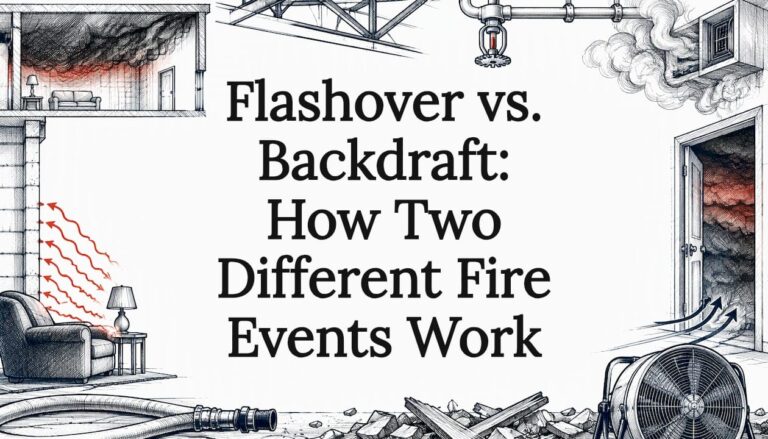
Fire Science · Feature
Flashover vs. Backdraft: How Two Different Fire Events Work
Flashover is a heat-driven event and backdraft is an air-driven one. See the physics, a side-by-side table, warning signs and how each shapes building design.
Have a question about your building?
For what the code requires, start with the Insights topics. For a specific project, talk to an engineer licensed in New York, New Jersey, Pennsylvania, Maryland or Delaware.