Fire pump design
When the municipal water supply cannot deliver the pressure and flow a sprinkler or standpipe system demands, a fire pump bridges the gap. DGA Fire Protection Engineering designs fire pump installations per NFPA 20 for commercial, industrial, and institutional facilities, from water supply analysis through acceptance testing support.
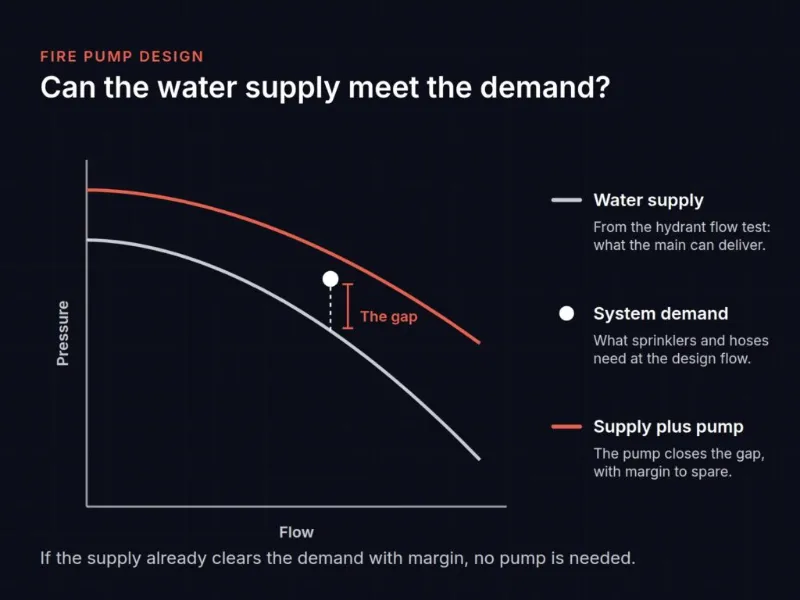
Water supply analysis comes first. DGA runs a flow test analysis of hydrant data against the sprinkler system demand before anyone sizes or prices a pump, and sometimes the answer is no pump at all.
What’s Included
What fire pump design includes
DGA designs fire pump installations for commercial, industrial, and institutional facilities. The firm’s engineers handle everything from the initial water supply analysis through pump selection, room layout, and acceptance testing support.
Fire pump sizing and selection
Rated flow, rated pressure, and driver type (electric or diesel) matched to system demand and the available water supply.
NFPA 20 compliance
Suction and discharge arrangements, relief valves, test headers, and controller requirements designed per NFPA 20.
Fire pump room layout
Equipment arrangement with required clearances, drainage, and ventilation for the pump, driver, and controller.
Jockey pump design
Pressure maintenance pump sizing that keeps the system pressurized without cycling the main fire pump.
Acceptance test criteria and commissioning
Test criteria defined per NFPA 20 with field support through the acceptance test and commissioning.
Witnessed field acceptance tests
Pass criteria defined per NFPA 20, then witnessed field acceptance tests for electric and diesel fire pumps, checked against the certified pump curve.
When It Applies
When fire pump design applies
Triggers
When you need it
- High-Rise Buildings: Elevation head and friction loss exceed the available municipal pressure.
- High-Demand Storage & Industrial: Warehouses and high-hazard occupancies with sprinkler demands above what the water supply can deliver.
- Limited Water Supplies: Sites on low-pressure, low-flow, or dead-end municipal mains.
- Existing Pump Evaluations: Performance curve reviews, controller replacements, and NFPA 20 compliance upgrades.
What We Deliver
Fire pump engineering & hydraulics
- NFPA 20 Sizing & Selection: Rated capacity and net pressure checked at churn, 100%, and 150% of rated flow.
- PE-Stamped Pump Room Plans: Equipment layouts, suction and discharge piping, bypass, test header, and sensing lines.
- Water Storage & Break Tanks: Suction tank capacity, duration, and anti-vortex plate details.
- Power & Acceptance Testing: Electric or diesel driver selection, normal and emergency power coordination, and acceptance test specifications.
This work is common on commercial high-rise, industrial and high-hazard, and cold storage and food manufacturing projects.
Process
The design process
01
Water supply analysis
Flow test data analyzed and system demand calculated to determine the shortfall, if any.
02
Pump selection
Rated capacity and driver type selected for the demand, the supply, and reliability requirements.
03
Design
Room layout, piping arrangement, and controls designed per NFPA 20.
04
Testing
Acceptance test criteria defined and field support provided through commissioning.
FAQ
Frequently asked questions
Electric or diesel: how is the driver type decided?
The reliability of the site power supply, local code requirements, and the owner’s preference all factor in. The firm lays out the tradeoffs for the specific facility.
Can the firm evaluate an existing fire pump?
Yes. The firm assesses existing installations for NFPA 20 compliance, performance issues, and remaining service life.
Does DGA witness acceptance tests?
Yes. The firm witnesses field acceptance tests, defines pass criteria per NFPA 20, and reviews results against the certified pump curve.
Which states are you licensed in?
New York, New Jersey, Pennsylvania, Maryland, Delaware, Washington, Oregon, and Florida. Each project is sealed by a Professional Engineer licensed in the state where it is located.
How do I know if my building needs a fire pump?
Compare what the water supply delivers with what the sprinkler and standpipe systems demand. If the supply falls short at the design flow, a pump closes the gap. A hydrant flow test and a hydraulic calculation answer the question.
From the Technical Library
Related Services
Related services
Also see FM Global Compliance for hydraulic verification against insurer data sheets.

Fire protection engineering design
Integrated sprinkler, alarm, and hydraulic design for new and existing buildings.

Sprinkler shop drawings & hydraulic calculations
Sprinkler shop drawings and hydraulic calculations for installation.