Fire alarm system design
A fire alarm system is only as good as its design. As a fire alarm design engineer in NYC and an NFPA 72 design consultant, DGA designs code-compliant systems for commercial, institutional and multi-family buildings across New York, New Jersey, Pennsylvania, Maryland, Delaware, Washington, Oregon, and Florida. For New York City projects, DGA prepares fire alarm drawings for FDNY plan examination and answers FDNY objections until the letter of approval is issued.
What’s Included
What fire alarm system design includes
DGA provides fire alarm system design for commercial, institutional, and multi-family buildings across New York, New Jersey, Pennsylvania, Maryland, Delaware, Washington, Oregon, and Florida. Every design is prepared and sealed by a licensed PE, coordinated to pass plan review and install cleanly in the field.
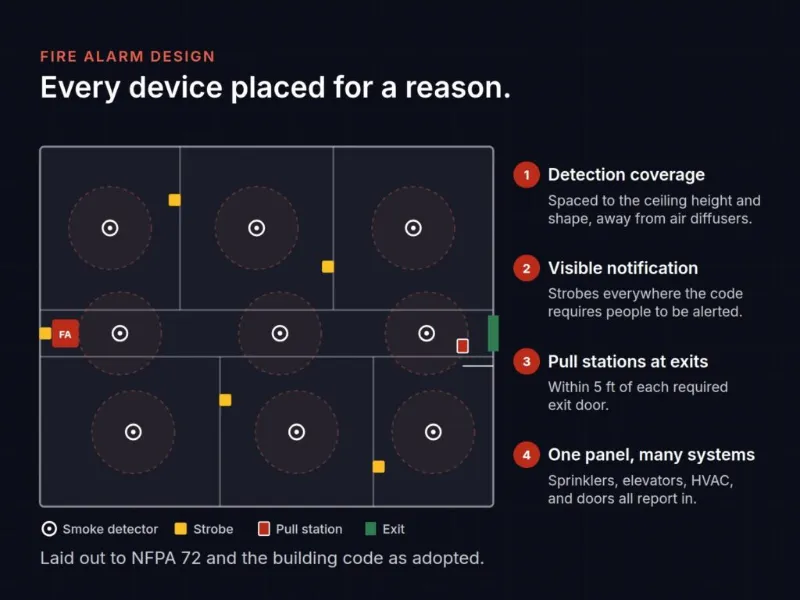
NFPA 72 system layout and device placement
Detection, notification, and initiating devices located per NFPA 72 spacing and coverage rules.
Notification appliance design
Audible and visible notification laid out for required intelligibility and coverage, including sleeping areas.
Sequence of operations
A written matrix defining exactly how the system responds to every initiating event.
Battery and voltage drop calculations
Supporting calculations for the permit package.
Shop drawing review
Review of contractor submittals against the design intent and code requirements.
Emergency communication and mass notification
Voice evacuation and mass notification systems designed to NFPA 72, for buildings that need more than tones and strobes.
When It Applies
When fire alarm system design applies
Triggers
When you need it
- New Construction & Core/Shell: High-occupancy buildings that need emergency voice/alarm communications (EVACS), pathway survivability, and building system interfaces.
- Occupancy & Tenant Changes: Layout changes that require new audibility, strobe candela coverage, or detection.
- Legacy System Modernization: Phased replacement of obsolete or non-compliant panels without taking the building offline.
- Design Gap Audits & Takeovers: Stalled or non-compliant designs, and recurring trouble conditions traced to design gaps that hold up AHJ sign-off.
What We Deliver
Fire alarm engineering deliverables
- Input/Output Matrix: Sequence of operations for fan shutdown, elevator recall, door release, and damper control.
- PE-Stamped Drawing Sets: Device layout plans, riser diagrams, panel schedules, and equipment specifications.
- Circuit & Battery Calculations: Voltage drop, secondary power battery sizing, and audibility calculations.
- AHJ Submittals & Variances: Code compliance packages and PE representation during plan review.
This work is common on healthcare and life sciences, education and higher ed, and residential projects.
Process
The design process
01
Review the building
The firm studies the architectural and MEP drawings, occupancy types, and the applicable code edition for the jurisdiction.
02
Design
Device layout, notification design, riser diagrams, and the sequence of operations matrix.
03
Document
Permit-ready drawings, specifications, and calculations.
04
Support
Plan review responses and construction-phase questions, including shop drawing review.
FAQ
Frequently asked questions
Which code governs fire alarm design?
NFPA 72, the National Fire Alarm and Signaling Code, is the primary standard. Local amendments and the IBC also set requirements for when systems are required and how they perform.
Does the firm design both addressable and conventional systems?
Yes. Most new commercial work uses addressable systems, and the firm’s designs specify the architecture that fits the building’s size and complexity.
Can the firm review a contractor’s shop drawings?
Yes. Third-party shop drawing review is a common engagement. The firm checks device layout, calculations, and code compliance before the client approves the submittal.
Which states are you licensed in?
New York, New Jersey, Pennsylvania, Maryland, Delaware, Washington, Oregon, and Florida. Each project is sealed by a Professional Engineer licensed in the state where it is located.
What is the difference between a fire alarm and a mass notification system?
A fire alarm system detects fire and tells people to leave. A mass notification system delivers live or recorded voice messages about any emergency, from severe weather to a security threat. Some buildings need both, integrated.
From the Technical Library
Related Services
Related services
Also see FDNY Plan Examination & Approvals for TM-1 objections, Letters of Defect and the final LOA, and PE Inspections & Certification Letters for sealed fire alarm certification letters.

Commissioning & integrated system testing
Third-party commissioning and integrated testing of fire protection systems.

Fire protection engineering design
Integrated sprinkler, alarm, and hydraulic design for new and existing buildings.

Smoke control system design & testing
Smoke control design, analysis, and acceptance testing.